Regional market entry rarely fails because a team lacks ideas. It fails when the team cannot verify access, platform behavior, support expectations, payment paths, and operator ownership before it scales. A small account plan gives the team a controlled way to test the market without turning every login into an informal exception.
Start from the business question
Do not begin with how many accounts to prepare. Begin with what the team needs to learn: which local platform rules matter, what content or listing states are required, how support will confirm identity, and which handoff records will be needed later. This keeps the account plan tied to a business decision instead of inventory pressure.
Map access, ownership, and evidence
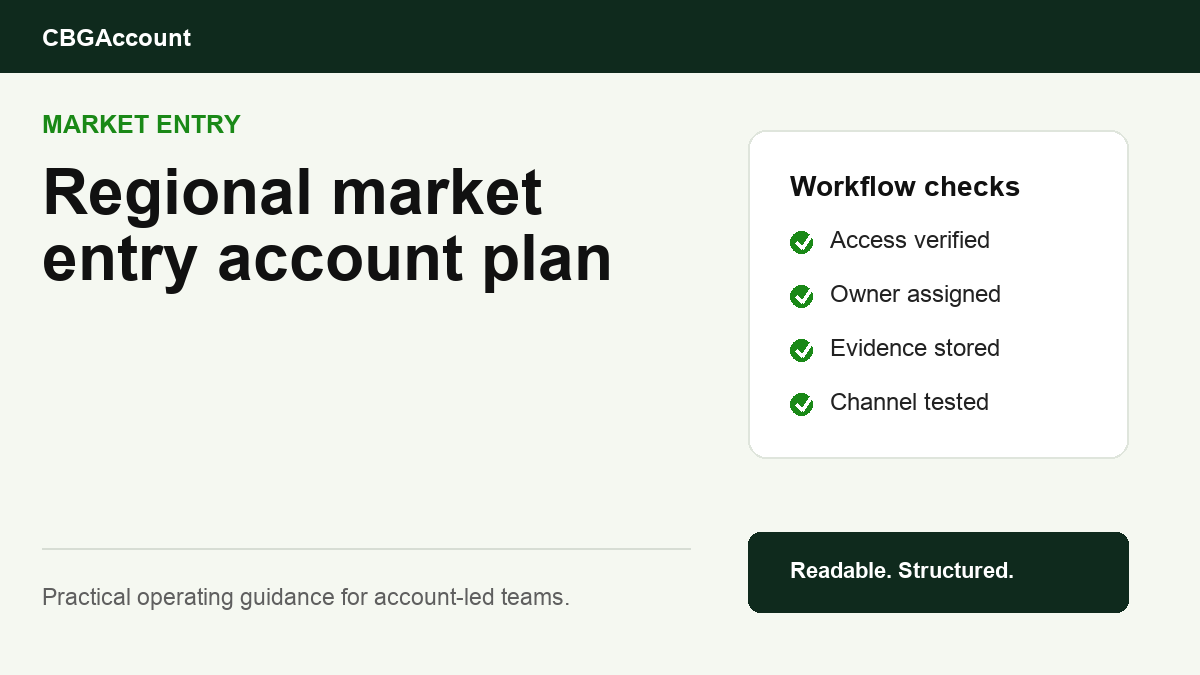
Each account should have a clear region, platform, login method, recovery path, responsible owner, allowed use case, and evidence location. If a team member cannot see who owns an account or where proof is stored, the workflow is not ready for a launch test.
Run small channel loops before scaling
Use a limited set of accounts to test search visibility, content publishing, marketplace listing rules, support response time, and payment or verification checkpoints. The goal is to find repeatable rules, not to push volume too early.
Convert findings into a reusable playbook
After the first loop, document what worked, what blocked progress, what support asked for, and which internal links or public guides should be updated. Link this plan to the broader account infrastructure workflow so future operators can reuse the learning.